Platform comparison
| Platform | YES odds | NO odds | Fee | KYC | Settlement | |
|---|---|---|---|---|---|---|
Polymarket (via PolyGram) Pick polygram.ink (preferred broker) |
8% | 92% | 0% (USDC on-chain) | No-KYC up to $1,500 | USDC, auto via UMA oracle | Trade this market → |
Polymarket (direct) polymarket.com |
8% | 92% | 0% | Geo-blocked in US/UK/EU | USDC, on-chain | Trade this market → |
Kalshi kalshi.com |
— | — | Up to 7% per trade | US-only, KYC required | USD | Trade this market → |
Betfair Exchange betfair.com |
— | — | 2-5% commission | Full KYC from first trade | GBP / EUR | Trade this market → |
Manifold Markets manifold.markets |
— | — | Play-money (mana) | None — play-money | Mana (no cash-out) | Trade this market → |
Market context
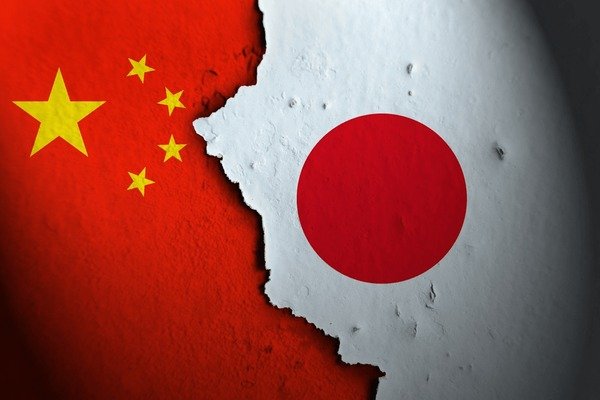
A direct military clash between Chinese and Japanese forces, involving missile strikes or gunfire, remains the core uncertainty for traders assessing the 8% YES price on Polymarket. This contract, settled in USDC on Polygon via conditional tokens, prices the risk of an actual exchange of force between November 2025 and December 2026, excluding non-violent warnings or uninhabited-area fire. The current low probability reflects a market view that while friction is high, full-scale engagement is unlikely before the settlement window closes.
Historically, Sino-Japanese relations have oscillated between prolonged stalemate and sudden escalation, most notably during the Second Sino-Japanese War which began with the Marco Polo Bridge incident in 1937 and quickly expanded into full invasion [1][2]. Unlike the 1894–95 conflict that established Japan as a major power, the 1937–45 war emerged from a localized incident that rapidly spiraled due to broader strategic ambitions [3][4]. Modern traders often reference these precedents to gauge how quickly a radar dispute or naval near-miss could escalate into direct force, though today’s nuclear deterrence and economic interdependence create a different threshold for escalation than in the 1930s.
Key catalysts include Taiwan-related naval drills, radar-lock incidents, and official statements from Beijing or Tokyo. Recent friction intensified when China’s Foreign Minister Wang Yi condemned Japan’s “military provocation” after Chinese jets targeted Japanese aircraft with radar during drills, highlighting growing tensions over Taiwan and regional security [6]. Traders should monitor scheduled defence announcements, joint exercise timelines, and any shifts in diplomatic rhetoric, as these dependencies often precede physical encounters. The market’s 8% pricing suggests that while the radar dispute is serious, it has not yet crossed the threshold into direct force.
Methodology
Methodologically we separate two layers: the live probability (Polymarket mid-price) and the platform attributes (fee, KYC, settlement currency, payment rails). That keeps the comparison honest — a single canonical probability across the row, with the venue-by-venue trade-offs spelt out in the columns next to it.
Resolution & payout
Polymarket-based markets settle through the UMA Optimistic Oracle on Polygon. A proposer submits the outcome, a two-hour challenge window opens, and unchallenged proposals finalise the resolution. Payouts settle automatically in USDC the moment the result is final — no bookmaker, no delay.
Kalshi-based markets settle in USD via the CFTC-regulated clearinghouse. Betfair Exchange settles in GBP/EUR net of commission. Manifold is play-money and does not pay out real funds.
FAQ
- Where can I trade this market with the lowest fees?
- Polymarket is geo-blocked in the US/UK/EU. The easiest 0%-fee broker into the same order book is PolyGram. Kalshi charges up to 7% per trade; Betfair Exchange takes 2-5% commission on net winnings.
- How does resolution work?
- Through the UMA Optimistic Oracle on Polygon: a proposer submits the outcome, a two-hour challenge window opens, and USDC payouts settle automatically once the result is final.
- What does Polymarket cost to trade?
- Polymarket itself charges 0% — the only cost is the Polygon network fee, typically under $0.01 per transaction. Off-chain venues like Kalshi or Betfair charge 2-7% commission.
- Do I need to KYC for this market?
- On Polymarket directly, no — it's wallet-based. Intermediary brokers like PolyGram trigger KYC only above $1,500 of lifetime trading volume; under that you trade pseudonymously with a single wallet address.
- How reliable are the quoted odds?
- The YES/NO percentages are the live mid-prices of the Polymarket order book. On deep markets they move every few seconds; on thinner ones you'll see short plateaus.
%22%2F%3E%3Cpath%20d%3D%22M%206%2066%20A%2026%2026%200%200%201%2058%2066%22%20fill%3D%22%23E6B98D%22%20opacity%3D%220.9%22%2F%3E%3Ccircle%20cx%3D%2232%22%20cy%3D%2226%22%20r%3D%2222%22%20fill%3D%22%23F5CBA7%22%2F%3E%3Cpath%20d%3D%22M%2010%2018%20Q%2016%204%2026%2010%20Q%2020%202%2032%206%20Q%2044%202%2038%2010%20Q%2048%204%2054%2018%22%20stroke%3D%22%2354a9eb%22%20stroke-width%3D%224%22%20fill%3D%22none%22%20stroke-linecap%3D%22round%22%2F%3E%3C%2Fsvg%3E) and
and%22%2F%3E%3Cpath%20d%3D%22M%206%2066%20A%2026%2026%200%200%201%2058%2066%22%20fill%3D%22%23E6B98D%22%20opacity%3D%220.9%22%2F%3E%3Ccircle%20cx%3D%2232%22%20cy%3D%2226%22%20r%3D%2222%22%20fill%3D%22%23F5CBA7%22%2F%3E%3Cpath%20d%3D%22M%2010%2018%20Q%2016%204%2026%2010%20Q%2020%202%2032%206%20Q%2044%202%2038%2010%20Q%2048%204%2054%2018%22%20stroke%3D%22%2354a9eb%22%20stroke-width%3D%224%22%20fill%3D%22none%22%20stroke-linecap%3D%22round%22%2F%3E%3C%2Fsvg%3E)
Trade China x Japan military clash before 2027? on PolyGram
Live order book, 0% fees, USDC settlement in seconds.
Open live market →