Platform comparison
| Platform | YES odds | NO odds | Fee | KYC | Settlement | |
|---|---|---|---|---|---|---|
Polymarket (via PolyGram) Pick polygram.ink (preferred broker) |
96% | 4% | 0% (USDC on-chain) | No-KYC up to $1,500 | USDC, auto via UMA oracle | Trade this market → |
Polymarket (direct) polymarket.com |
96% | 4% | 0% | Geo-blocked in US/UK/EU | USDC, on-chain | Trade this market → |
Kalshi kalshi.com |
— | — | Up to 7% per trade | US-only, KYC required | USD | Trade this market → |
Betfair Exchange betfair.com |
— | — | 2-5% commission | Full KYC from first trade | GBP / EUR | Trade this market → |
Manifold Markets manifold.markets |
— | — | Play-money (mana) | None — play-money | Mana (no cash-out) | Trade this market → |
Outcome probabilities
Current market-implied probability for each outcome, from the live order book.
| Outcome | Probability |
|---|---|
| 33°C | 96% |
| 34°C or higher | 5% |
| 24°C or below | 0% |
| 25°C | 0% |
| 26°C | 0% |
| 27°C | 0% |
| 28°C | 0% |
| 29°C | 0% |
| 30°C | 0% |
| 31°C | 0% |
| 32°C | 0% |
Market context
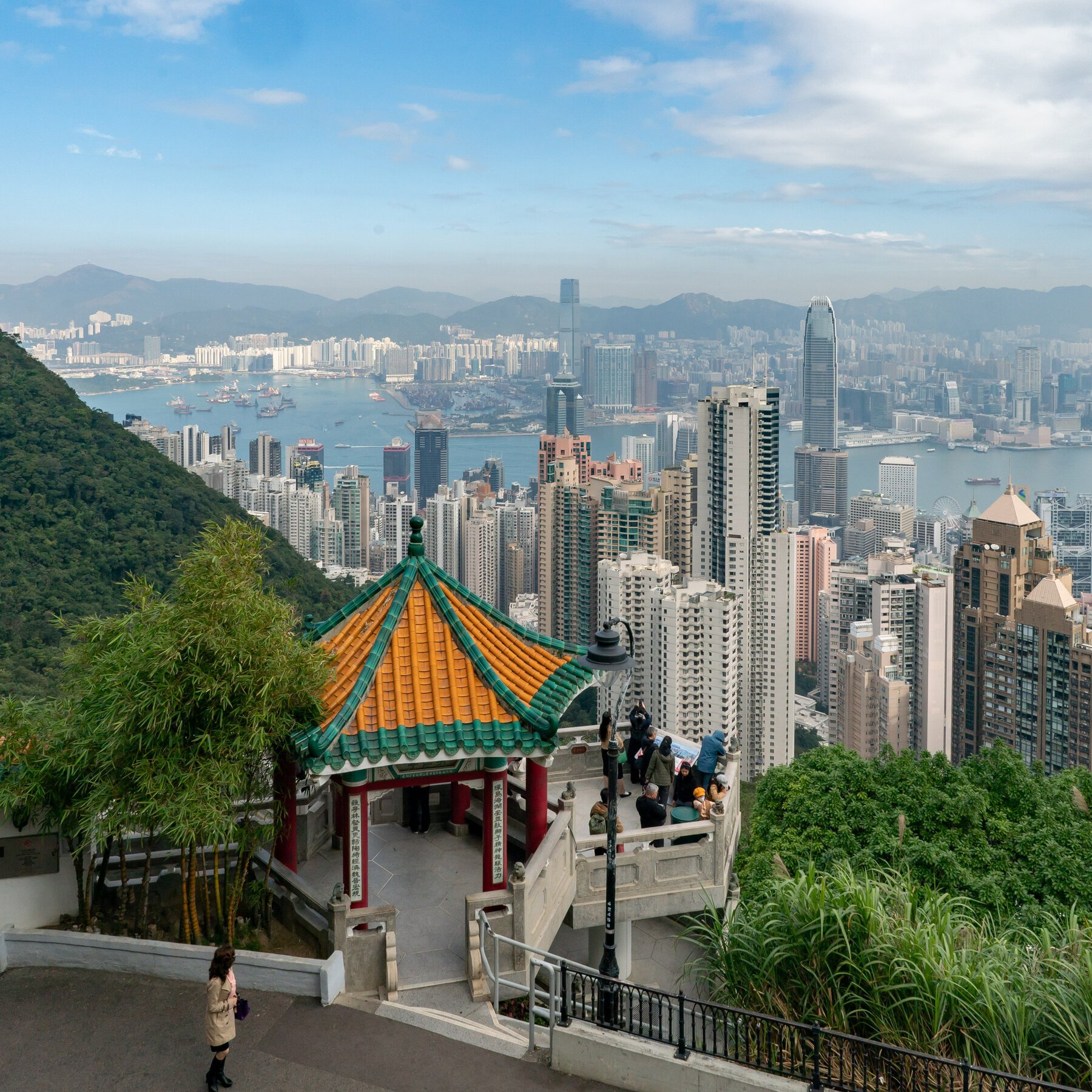
On 5 July 2026, Hong Kong will face its peak summer heat, with the Hong Kong Observatory recording the absolute daily maximum temperature in degrees Celsius. The current Polymarket contract prices this event at 0% YES, implying the crowd believes the temperature will not fall into the specified range, despite seasonal forecasts predicting normal to above-normal temperatures for July through September 2026[1]. Historical context is critical here: 2026 is already projected to be one of Hong Kong’s hottest years, with the annual mean temperature expected to exceed the usual average of 23.7°C[3]. Recent records show the Observatory logging a maximum of 36.1°C in May 2026, breaking the 1963 record of 35.5°C[5], while July typically sees daily highs between 87°F and 95°F (30.6°C to 35°C)[2]. These figures suggest the 0% probability may be an overreaction to the specific range rather than the underlying heat intensity.
Traders must monitor the Hong Kong Observatory’s finalised "Daily Extract" data, which will confirm the "Absolute Daily Max" once published after the settlement window ends on 5 July 2026 at 12:00 UTC[1]. The resolution depends entirely on this official dataset, not on third-party forecasts or weather apps. Recent news highlights that Hong Kong is experiencing its hottest summer on record, with a mean maximum temperature of 32.4°C recorded in July 2025[9], reinforcing the likelihood of extreme heat. On-chain mechanics remain straightforward: USDC settles trades on the Polygon network using conditional tokens, meaning liquidity flows directly based on the final temperature reading. Watch for any official announcements from the Observatory regarding heatwave advisories or tropical cyclone activity, as these could influence the peak temperature. The contract’s 0% price may shift if the final data confirms temperatures align with the 2026 seasonal forecast of above-normal heat[1].
Methodology
Methodologically we separate two layers: the live probability (Polymarket mid-price) and the platform attributes (fee, KYC, settlement currency, payment rails). That keeps the comparison honest — a single canonical probability across the row, with the venue-by-venue trade-offs spelt out in the columns next to it.
Resolution & payout
Settlement runs on-chain. Polymarket's contract logic separates YES and NO shares as conditional tokens; at resolution the winning share lifts to $1.00 and the losing one to $0. The outcome input comes from the UMA Optimistic Oracle, which secures against bad resolution with a bond + dispute window.
Once finalised, the smart contract pays USDC to the holders' wallets within minutes — no withdrawal fees beyond Polygon network gas. Kalshi settles in USD via CFTC clearance, Betfair in account currency net of commission, Manifold in play-money mana with no cash-out.
FAQ
- How does resolution work?
- Through the UMA Optimistic Oracle on Polygon: a proposer submits the outcome, a two-hour challenge window opens, and USDC payouts settle automatically once the result is final.
- What's the difference between YES and NO shares?
- A YES share pays $1.00 if the event happens, $0 otherwise. A NO share pays $1.00 if the event doesn't happen. The market price between 0¢ and 100¢ is the implied probability.
- What does Polymarket cost to trade?
- Polymarket itself charges 0% — the only cost is the Polygon network fee, typically under $0.01 per transaction. Off-chain venues like Kalshi or Betfair charge 2-7% commission.
- How fast are USDC deposits?
- Polygon credits deposits after 12 confirmations — usually under 30 seconds. Withdrawals follow the same path and land back in your wallet within minutes.
- How reliable are the quoted odds?
- The YES/NO percentages are the live mid-prices of the Polymarket order book. On deep markets they move every few seconds; on thinner ones you'll see short plateaus.
%22%2F%3E%3Cpath%20d%3D%22M%206%2066%20A%2026%2026%200%200%201%2058%2066%22%20fill%3D%22%23E6B98D%22%20opacity%3D%220.9%22%2F%3E%3Ccircle%20cx%3D%2232%22%20cy%3D%2226%22%20r%3D%2222%22%20fill%3D%22%23F5CBA7%22%2F%3E%3Cpath%20d%3D%22M%2010%2018%20Q%2016%204%2026%2010%20Q%2020%202%2032%206%20Q%2044%202%2038%2010%20Q%2048%204%2054%2018%22%20stroke%3D%22%2354a9eb%22%20stroke-width%3D%224%22%20fill%3D%22none%22%20stroke-linecap%3D%22round%22%2F%3E%3C%2Fsvg%3E) and
and%22%2F%3E%3Cpath%20d%3D%22M%206%2066%20A%2026%2026%200%200%201%2058%2066%22%20fill%3D%22%23E6B98D%22%20opacity%3D%220.9%22%2F%3E%3Ccircle%20cx%3D%2232%22%20cy%3D%2226%22%20r%3D%2222%22%20fill%3D%22%23F5CBA7%22%2F%3E%3Cpath%20d%3D%22M%2010%2018%20Q%2016%204%2026%2010%20Q%2020%202%2032%206%20Q%2044%202%2038%2010%20Q%2048%204%2054%2018%22%20stroke%3D%22%2354a9eb%22%20stroke-width%3D%224%22%20fill%3D%22none%22%20stroke-linecap%3D%22round%22%2F%3E%3C%2Fsvg%3E)
Trade Highest temperature in Hong Kong on July 5? on PolyGram
Live order book, 0% fees, USDC settlement in seconds.
Open live market →